SYSTEM_METRICS // CASE_STUDY_LOG
2024// packageBeej
“A flexible starter template for React and Next.js with pre-configured UI libraries (TailwindCSS, Chakra UI, Mantine), state management (Redux, Jotai), API handling, and more—customizable to your needs.”
01. What the Project Is
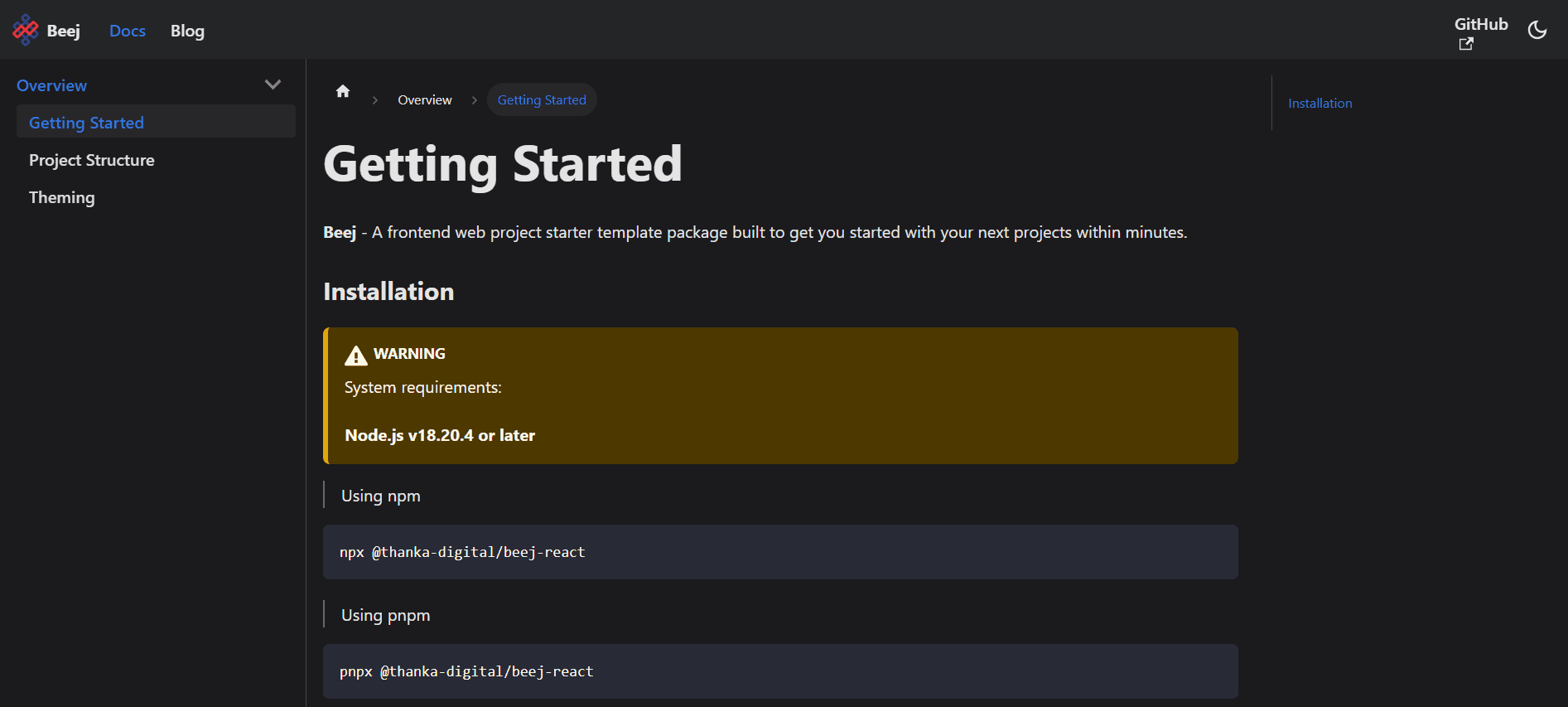
Beej is an open-source, JavaScript/TypeScript-based CLI scaffolding tool and npm package engineered to deliver highly customizable frontend project boilerplate environments. The system acts as an interactive project orchestrator, allowing engineers to instantaneously spin up pre-configured structural layouts with flexible options to select their preferred web frameworks, state management ecosystems, UI libraries, and data fetching components.
Beej_01.png
02. Why Technical Choices Were Made
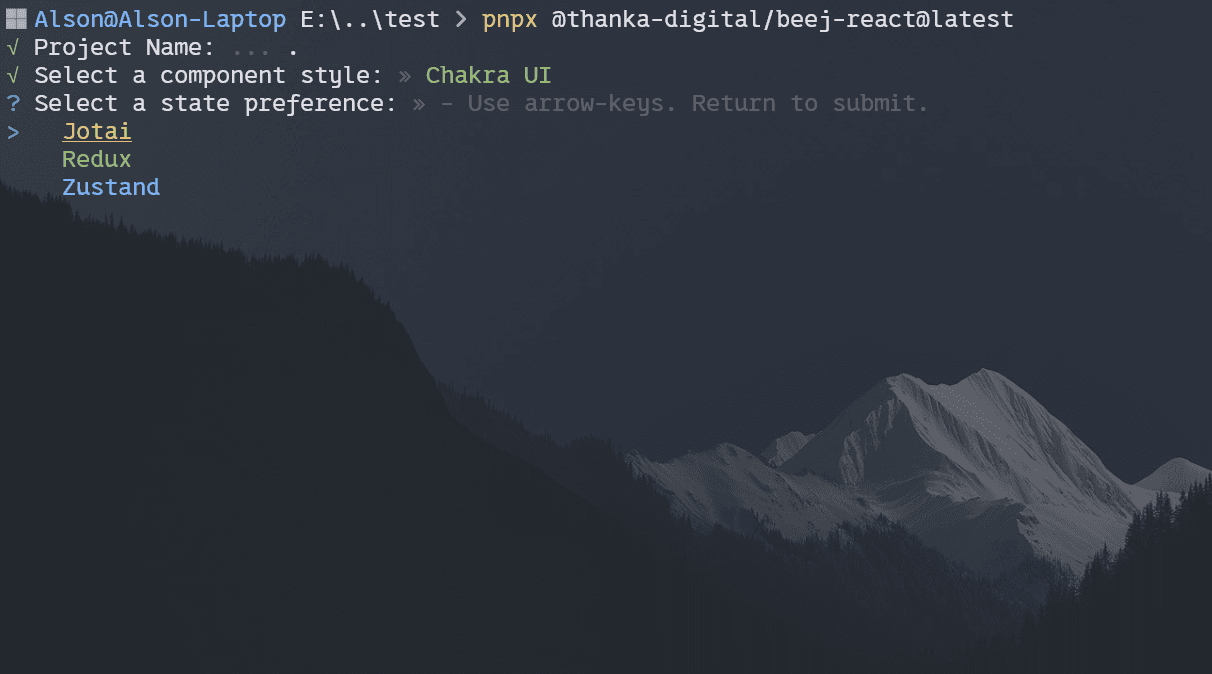
After seven years of building web applications, I kept running into the same redundant configuration patterns across every new codebase. I wanted to design a reusable architectural base to eliminate this setup friction. Inspired by how Vite handles dynamic shell scaffolding, I built a package that guides developers through terminal prompts to choose UI layers, styling setups, and state engines, turning my personal configurations into an open-source tool for everyone.
03. How It Was Implemented
The utility started as a basic GitHub repository tracking standalone directory structures managed by a centralized terminal UI controller loop. However, manually maintaining individual configurations, handling cross-dependencies, and orchestrating deployment tracks quickly created scaling bottlenecks. To optimize the codebase, I migrated the architecture into a Turborepo monorepo structure. This setup decouples each framework template into independent workspace layers, automates integration testing pipelines, and streamlines our publishing workflows down to a single pipeline command.
Beej_03.png
> stream closed // text layer read complete.